Top 10 Fiber Laser Cutting Machines for Global Buyers?
In the world of manufacturing, the Fiber Laser Cutting Machine stands out for its efficiency and precision. These machines are essential for various industries, including automotive, aerospace, and metal fabrication. Their ability to cut through thick materials with fine detail sets them apart from traditional methods.
Businesses seek reliable and high-performing options. However, not all machines are created equal. Some may struggle under heavy workloads or lack the necessary support for advanced projects. It’s crucial to evaluate the available choices carefully. You must also consider factors like power, speed, and maintenance.
Choosing the right Fiber Laser Cutting Machine can significantly impact production processes. Buyers need to make informed decisions based on their specific requirements and operational capabilities. With the right insights, businesses can enhance productivity and stay competitive in the market.
Overview of Fiber Laser Cutting Technology
Fiber laser cutting technology has transformed manufacturing. The precision and efficiency of fiber lasers have elevated them as a preferred choice for various industries. Reports indicate that the global fiber laser market is expected to reach $5 billion by 2025, growing annually by approximately 10%. This growth is fueled by the rising demand for high-quality cutting solutions.
Fiber lasers offer distinct advantages over traditional cutting technologies. They provide excellent cutting speed and reduce operational costs. With a smaller focused beam, they minimize heat-affected zones, leading to cleaner cuts. Furthermore, fiber laser systems can operate on a variety of materials, including metal and plastics.
However, the sector has its challenges. While fiber lasers reduce energy consumption effectively, initial setup costs can be high. Users must also consider the need for skilled operators to handle advanced software and systems. Continuous training and development are essential to optimize machine use. The technology is rapidly evolving, so staying updated on the latest advancements is crucial for maximizing investment.
Top 10 Fiber Laser Cutting Machines for Global Buyers
| Model |
Power (Watts) |
Max Cutting Speed (m/min) |
Material Thickness (mm) |
Weight (kg) |
Dimension (mm) |
| High-Speed Fiber Laser |
2000 |
30 |
25 |
1500 |
4000 x 2000 |
| Precision Laser Cutter |
3000 |
28 |
20 |
1600 |
4200 x 2100 |
| Industrial Fiber Cutter |
4000 |
25 |
15 |
1800 |
4500 x 2200 |
| Versatile Metal Cutter |
1500 |
35 |
10 |
1400 |
3800 x 1900 |
| Compact Fiber Laser System |
1000 |
40 |
8 |
1200 |
3500 x 1800 |
| Heavy-Duty Laser Cutter |
6000 |
20 |
30 |
2000 |
4600 x 2300 |
| Dynamic Laser Cutting System |
5000 |
22 |
20 |
1700 |
4400 x 2200 |
| Robust Fiber Cutting Machine |
8000 |
15 |
40 |
2500 |
4800 x 2400 |
| Advanced Laser Cutting Tech |
7000 |
18 |
25 |
2200 |
4700 x 2300 |
Criteria for Selecting Top Fiber Laser Cutting Machines
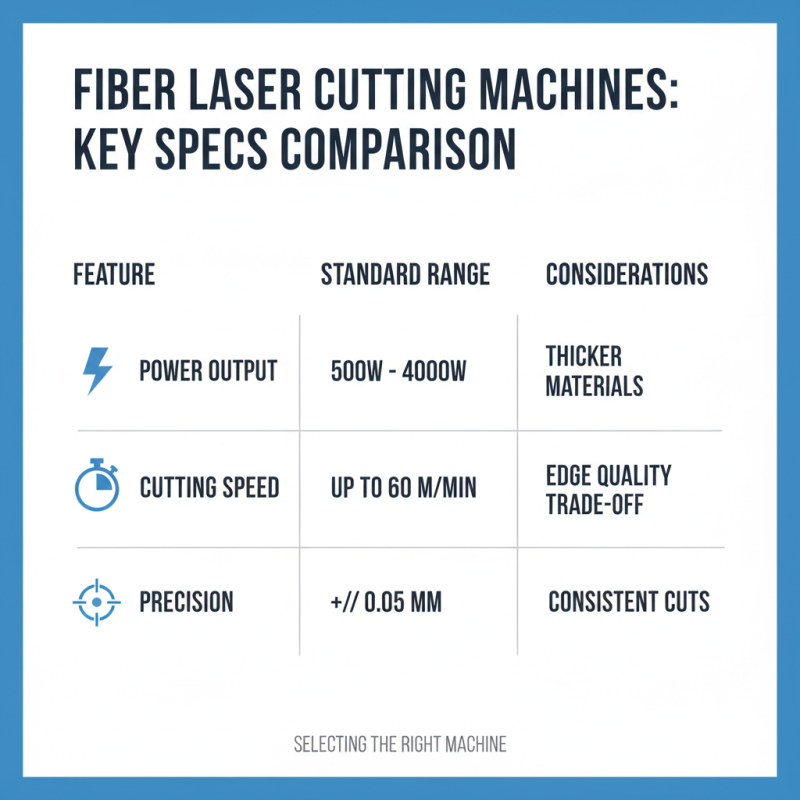
When selecting the top fiber laser cutting machines, understanding specific criteria is key. A critical element is the power of the laser. Higher wattage allows for faster cutting speeds and the ability to work with thicker materials. Buyers should also assess the machine's flexibility. A versatile machine can handle various materials, from metals to plastics, broadening project potential.
Another important factor is the software compatibility. User-friendly and effective software enhances the machine’s efficiency. Look for a system that integrates well with existing operations. Precision and accuracy are crucial as well. High-quality machines should produce clean cuts with minimal kerf and distortion. This ensures a professional finish.
Support and service matter too. Reliable customer service can greatly affect productivity. It’s essential to consider the accessibility of technical support and replacement parts. Additionally, buyers should reflect on long-term operational costs. Maintenance and energy consumption can impact the overall investment significantly. Balancing initial costs with expected longevity and efficiency is necessary for making an informed decision.
Review of the Leading Fiber Laser Cutting Machines in the Market
When it comes to fiber laser cutting machines, the market offers a variety of choices tailored for different needs. Users seek machines that can deliver precision, efficiency, and durability. Each model presents a distinct set of features that cater to various industries, making it crucial to understand their capabilities.
Take into account the robust design of these machines. They can handle intricate cuts and impart high-speed performance. However, not every machine excels in all areas. Some may have limitations in material thickness while others falter on speed. Potential buyers should assess their specific requirements before purchasing. Feedback from users often highlights both strengths and weaknesses in performance.
Moreover, ease of use is a significant factor. Some machines have user-friendly interfaces, while others demand extensive training. It is vital to consider after-sales support. While many manufacturers provide reliable assistance, experiences vary widely. This inconsistency can influence your choice. Always research and consult with peers to gain insight into real-world performance. Gathering diverse opinions can lead to a wiser investment.
Insights into Manufacturer Support and Customer Reviews
The world of fiber laser cutting machines is rapidly evolving. For global buyers, the importance of manufacturer support and customer reviews cannot be overstated. A recent market report highlights that nearly 70% of buyers prioritize after-sales support when selecting a machine. This statistic reveals a significant trend towards valuing long-term relationships over just purchase price. Good support can lead to improved productivity and reduced downtime.
Customer reviews also play a crucial role. Research shows that 85% of potential buyers read reviews before making a decision. Positive feedback on machine performance and efficiency can greatly influence purchasing behavior. However, not all reviews are genuine. Some may be biased, leading buyers to question their authenticity. This uncertainty stresses the need for proper vetting of sources.
Tips: Look for platforms with verified reviews. Engage with forums where users discuss their experiences. This can provide real insights into performance and support issues over time. Assess the technical documentation provided by manufacturers, as clear instructions indicate a commitment to customer education. Users often find it helpful to seek out communities of fellow machine operators for shared experiences and advice.
Top 10 Fiber Laser Cutting Machines - Performance Insights